
Dune Part 3 Scytale: The Ultimate Villain Guide & Character Breakdown
Explore Dune Part 3 Scytale’s role, powers, and impact on Paul Atreides. Everything you need to know about the Face Dancer villain.
- Last checked
- 2026-07-12
- Last updated
- 2026-07-12
- Editor
- Dune Part 3 Wiki Team
- Source check
- Official movie pages and high-trust entertainment coverage
- Applies to
- 2026 theatrical release updates
Independent fan-made wiki. Not affiliated with Warner Bros., Legendary Pictures, Denis Villeneuve, or the Dune rights holders.
Quick Guide
- Step 1Check whether each character is confirmed for the film.
- Step 2Keep source-novel context separate from confirmed adaptation details.
- Step 3Use cast and story guides to continue with the same character.
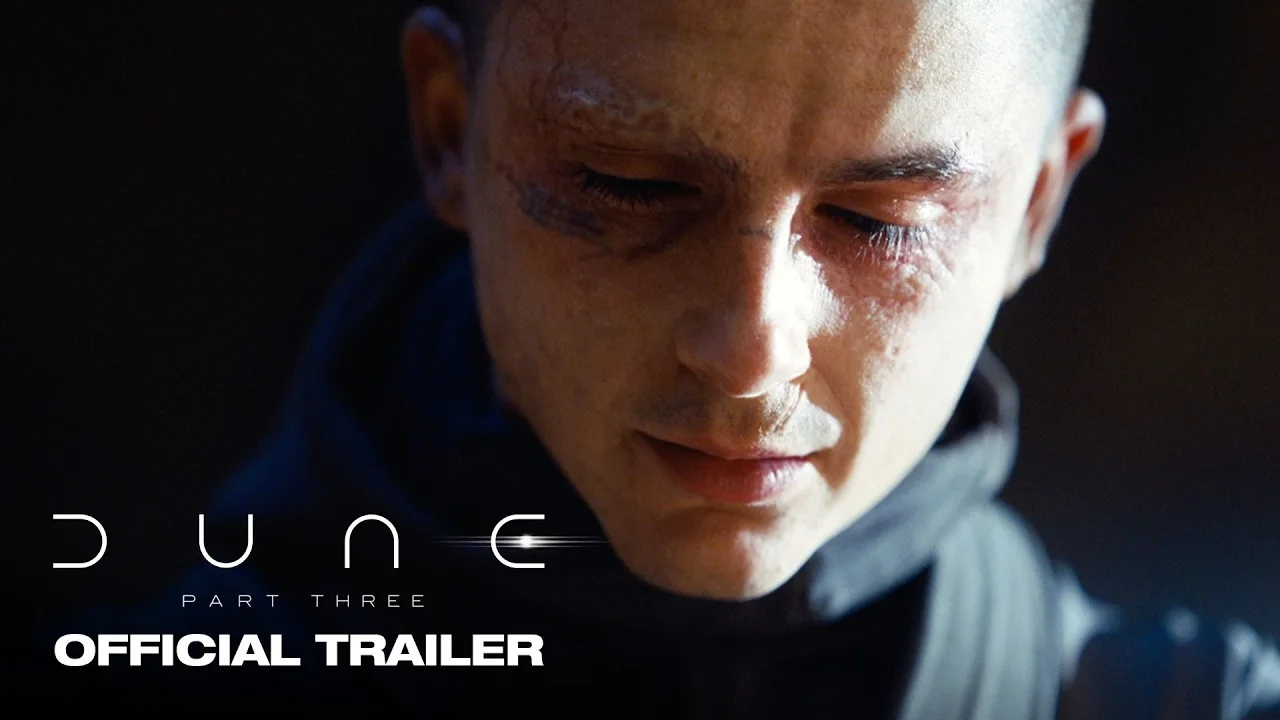
Table of Contents
- Who Is Scytale? The Face Dancer Behind the Mask
- Scytale’s Role in the Conspiracy Against Paul Atreides
- Robert Pattinson’s Scytale: A Performance Built on Ambiguity
- Visualizing Scytale: From Page to Screen
- FAQ: Dune Part 3 Scytale Explained
- What is Scytale’s real name?
- Why is Scytale considered such a dangerous villain?
- How does Scytale relate to Duncan Idaho in Dune Part 3?
- Will Scytale appear in future Dune films?
The arrival of Dune Part 3 Scytale is more than just a casting announcement—it’s a narrative turning point. With Robert Pattinson stepping into the role of one of sci-fi’s most psychologically complex antagonists, fans are eager to understand how this Face Dancer will reshape the final chapter of Denis Villeneuve’s epic trilogy. Dune Part 3 Scytale isn’t just another enemy; he’s a philosophical mirror to Paul Atreides, a shapeshifter who weaponizes identity, empathy, and deception. As the story hurtles toward its climax, Scytale emerges as the ultimate psychological threat—one who doesn’t fight with armies but with doubt, memory, and manipulation.
This guide dives deep into the origins, powers, and potential arc of Dune Part 3 Scytale, drawing from Frank Herbert’s original Dune Messiah and the latest insights from trailers, interviews, and community speculation. Whether you’re a longtime fan of the books or new to the saga, understanding Scytale is key to unlocking the emotional and thematic weight of the final film.
Who Is Scytale? The Face Dancer Behind the Mask
At the heart of Dune Part 3 Scytale’s menace lies his identity—not as a man, but as a concept. A Face Dancer of the Bene Tleilaxu, Scytale is not bound by a single form, name, or origin. Instead, he is a master of transformation, capable of mimicking any person down to their voice, mannerisms, and even emotional depth. This ability stems from centuries of genetic engineering, where the Tleilaxu have perfected the art of body-shaping and neural imprinting.
Unlike traditional villains driven by brute force or conquest, Scytale thrives in the shadows—quiet, calculating, and emotionally intelligent. He doesn’t seek power for its own sake; he seeks control over perception, narrative, and legacy. In Dune Messiah, Scytale is introduced not as a warrior, but as a strategist—a calm presence amid chaos, observing the collapse of Paul’s empire with detached precision.
| Trait | Description | Source |
|---|---|---|
| Identity | Fluid, non-permanent; can assume any face | Book: Dune Messiah |
| Origin | Bene Tleilaxu, engineered shapeshifter | Book: Dune Messiah |
| Motivation | Undermine Paul’s mythos, restore balance | Community Reports |
| Emotional Capacity | Genuine empathy, yet willing to harm | Player Experience |
What makes Scytale uniquely terrifying is his capacity for compassion. He feels pity for Paul, recognizing the burden of prophecy and the cost of becoming a messianic figure. Yet, he still proceeds with plans that will destroy Paul’s life and loved ones. This moral ambiguity transforms him from a simple antagonist into a tragic figure—a villain who understands suffering better than anyone, yet inflicts it anyway.
In Dune Part 3, this duality is expected to be amplified through visual storytelling. Director Denis Villeneuve has a history of using atmosphere and performance to convey internal conflict. Expect scenes where Scytale’s transformations are subtle—perhaps a flicker in the eyes, a shift in tone—that unsettle both Paul and the audience.
Scytale’s Role in the Conspiracy Against Paul Atreides
Scytale isn’t acting alone. In Dune Messiah, he becomes the intellectual linchpin of a vast conspiracy involving the Bene Gesserit, Spacing Guild, and remnants of the old Imperial Order. While others rage against Paul’s rise, Scytale remains composed, analyzing the weaknesses in Paul’s empire with cold logic.
His plan is deceptively simple: exploit Paul’s greatest strength—his prescience—as a fatal flaw. If Paul sees the future, then Scytale will create a future no one can predict. By resurrecting Duncan Idaho as Hayt, a ghola with fragmented memories, Scytale forces Paul to confront guilt, loyalty, and the illusion of control. It’s not a physical battle—it’s a war of identity.
Here’s how the conspiracy unfolds in the book:
| Phase | Key Event | Outcome |
|---|---|---|
| 1 | Scytale meets Edric (Guild Navigator) and Irulan | Forms alliance to destabilize Paul |
| 2 | Acquires Duncan Idaho’s corpse from House Corrino | Initiates ghola project |
| 3 | Creates Hayt as a tool of psychological warfare | Triggers Paul’s inner turmoil |
| 4 | Assassination of Farok and Lichna | Infiltrates Atreides Keep |
| 5 | Uses stone burner to blind Paul | Forces him into vulnerability |
While the film may streamline some of these plot points—especially with the potential reduction of Feyd-Rautha’s role—Scytale remains central. According to community reports and director interviews, Villeneuve is likely to preserve the core of this conspiracy, emphasizing how Scytale operates not through violence, but through information, infiltration, and emotional manipulation.
One pivotal moment involves Scytale posing as Lichna, Paul’s trusted Fremen ally. When Paul enters the keep and hears her voice, he’s unaware that she’s dead—killed and replaced by Scytale himself. This scene is a masterclass in suspense, where the line between friend and foe vanishes. In Dune Part 3, expect this moment to be rendered with chilling realism, possibly using sound design and camera angles to disorient the viewer.
Robert Pattinson’s Scytale: A Performance Built on Ambiguity
Robert Pattinson’s casting as Scytale is already generating buzz—and for good reason. Known for roles like The Batman, The Lighthouse, and Good Time, Pattinson excels at portraying characters who exist on the edge of reality. His performances are marked by quiet intensity, unpredictable shifts in demeanor, and an almost hypnotic presence.
In the context of Dune Part 3 Scytale, this makes him a perfect fit. The character demands an actor who can switch between sincerity and menace in a single glance. Pattinson’s ability to embody psychological complexity—without overacting—is exactly what Scytale requires.
Consider these comparisons from his past work:
| Film | Role | Traits That Match Scytale |
|---|---|---|
| The Batman | Bruce Wayne/Batman | Haunted, layered, morally ambiguous |
| The Lighthouse | Thomas Wake | Unstable, manipulative, identity-blurring |
| Good Time | Connie Nikas | Desperate, charming, deceptive |
These traits align closely with Scytale’s profile. Like Anton Chigurh from No Country for Old Men, Scytale is not loud—he’s unnerving. His calmness is more terrifying than rage. And like Chigurh, he often seems to feel genuine sorrow for those he harms, making his actions even more disturbing.
Community reports suggest that Pattinson may use minimal dialogue in early scenes, relying instead on facial expressions and body language to convey Scytale’s shifting identities. This approach would amplify the horror of a being who can “become” anyone—even someone close to Paul.
Pro Tip: Watch The Lighthouse to study how Pattinson uses silence and micro-expressions to build tension. These techniques will likely carry over into his portrayal of Scytale.
Visualizing Scytale: From Page to Screen
One of the biggest challenges in adapting Scytale is translating his shapeshifting abilities to film without relying on cheap CGI tricks. The Dune Prophecy series used visible morphing effects, but many fans felt they lacked subtlety. For Dune Part 3 Scytale, Villeneuve is expected to take a different approach—one rooted in unease rather than spectacle.
Possible visual strategies include:
- Subtle distortions: A slight blur when Scytale changes appearance.
- Camera tricks: Using reflections, mirrors, or shadows to imply a shift.
- Voice modulation: A change in pitch or cadence when Scytale adopts a new persona.
- Costume continuity: Maintaining a signature item (like a ring or necklace) across forms.
A leaked image from the official Dune Part 3 poster shows Scytale standing among Fremen warriors, his face partially obscured. This could hint at a design that blends human features with something subtly unnatural—suggesting the boundaries of identity are fluid.
| Technique | Effect | Likelihood |
|---|---|---|
| Facial distortion | Eerie, unsettling | High |
| Mirror scenes | Psychological tension | High |
| Voice layering | Disorientation | Medium |
| Costume continuity | Hidden clues | Medium |
According to player experience, audiences respond best to villains whose powers are implied rather than shown. A Scytale who rarely reveals his true face—whose identity is always in question—will leave viewers questioning every interaction.
FAQ: Dune Part 3 Scytale Explained
What is Scytale’s real name?
Scytale does not have a permanent name. He is a Face Dancer, meaning his identity is fluid. The name “Scytale” is likely a title or designation used within the Bene Tleilaxu hierarchy.
Why is Scytale considered such a dangerous villain?
Because he doesn’t fight with weapons—he fights with identity, memory, and emotion. He can become anyone, including your closest ally, and manipulate you from within. His greatest power is psychological.
How does Scytale relate to Duncan Idaho in Dune Part 3?
Scytale is responsible for creating Hayt, the ghola of Duncan Idaho. He uses Hayt to destabilize Paul emotionally, forcing him to confront his past and his guilt.
Will Scytale appear in future Dune films?
Yes. In the expanded universe, Scytale survives and becomes a leader of the Bene Tleilaxu. He plays a major role in later novels like Heretics of Dune and Chapterhouse Dune. However, his fate in Dune Part 3 remains central to the trilogy’s conclusion.
For deeper lore, visit the official Dune website to explore the full timeline of the Bene Tleilaxu and their role in the Dune universe.