
Dune Part 3 Hayt: The Tragic Return of Duncan Idaho Explained
Uncover the mystery behind Dune Part 3 Hayt — a ghola created to destroy Paul Atreides. Full character breakdown.
- Last checked
- 2026-07-12
- Last updated
- 2026-07-12
- Editor
- Dune Part 3 Wiki Team
- Source check
- Official movie pages and high-trust entertainment coverage
- Applies to
- 2026 theatrical release updates
Independent fan-made wiki. Not affiliated with Warner Bros., Legendary Pictures, Denis Villeneuve, or the Dune rights holders.
Quick Guide
- Step 1Check whether each character is confirmed for the film.
- Step 2Keep source-novel context separate from confirmed adaptation details.
- Step 3Use cast and story guides to continue with the same character.
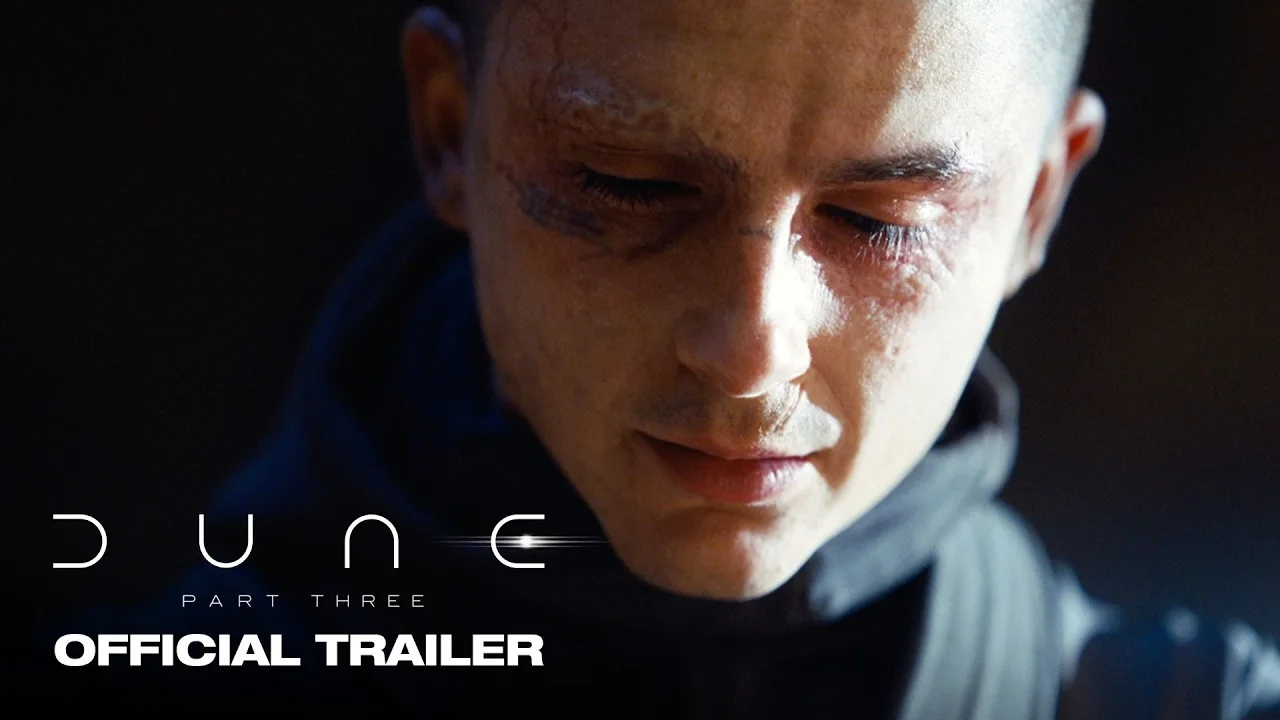
Table of Contents
Use this Dune Part 3 Hayt as your practical checklist. This Dune Part 3 Hayt focuses on verified gameplay. Keep this Dune Part 3 Hayt open while practicing. This Dune Part 3 Hayt avoids generic advice.
The return of Duncan Idaho in Dune Part 3 isn’t just a surprise—it’s a psychological trap wrapped in grief. Fans who mourned his death in Part One will be stunned by the arrival of Hayt, a figure that looks like their beloved warrior but carries a far darker purpose. This isn’t a resurrection. It’s a calculated weapon. The name “Hayt” echoes through the Dune universe like a warning. And as the story unfolds, it becomes clear: Dune Part 3 Hayt is not a friend. He’s an enemy wearing a familiar face.
What makes Hayt so devastating isn’t just his appearance or swordsmanship—it’s what he represents. A ghost from the past, rebuilt not for loyalty, but for betrayal. The Tleilaxu, long hidden in the shadows of the Imperium, have engineered this moment. They’ve taken Duncan’s body and reformed him into something new—something more dangerous. In Dune Part 3, Hayt isn’t just a character; he’s the emotional core of a tragedy that questions identity, memory, and the cost of longing.
This article dives deep into the origins, motivations, and implications of Dune Part 3 Hayt, exploring how Jason Momoa brings this complex figure to life with haunting precision. From axolotl tanks to Mentat conditioning, every detail serves a larger theme: the fragility of human emotion when pitted against cold, calculated design.
Who Is Hayt? The Ghola Born from Grief
In Frank Herbert’s original Dune saga, Duncan Idaho was more than a loyal protector—he was Paul Atreides’ closest confidant and one of the most skilled warriors in the known universe. His sacrifice on Arrakis was legendary, a moment etched into fans’ memories. But in Dune Part 3, the narrative takes a chilling turn: Duncan returns—not as a spirit, nor a clone, but as a ghola.
Unlike clones, which are grown from living tissue, gholas are regrown from the cellular remains of the deceased. The Tleilaxu, masters of bioengineering, use massive axolotl tanks to grow these beings. What results is a physical duplicate—identical in form—but devoid of memory, personality, or soul. It’s a blank slate waiting to be filled.
Hayt is not just a copy. He’s a weaponized version of Duncan. The Tleilaxu didn’t stop at replicating his combat skills—they trained him as a Mentat, a human equivalent of a supercomputer. In a universe where artificial intelligence was banned after the Butlerian Jihad, Mentats are rare and invaluable. By combining Duncan’s lethal swordplay with hyper-rational thought, Hayt becomes something beyond human: a perfect assassin designed to destabilize Paul from within.
| Feature | Original Duncan Idaho | Hayt (Dune Part 3) |
|---|---|---|
| Origin | Living warrior | Ghola from axolotl tank |
| Memory | Full personal history | Blank slate, no memories |
| Skills | Master swordsman | Swordsman + Mentat-level intellect |
| Loyalty | Devoted to Paul | Conditioned to oppose Paul |
| Eyes | Natural brown | Silver/white (sign of ghola) |
The visual cues alone signal the difference. Hayt’s silver eyes—highlighted in the latest trailer—are a telltale sign of a ghola in the Dune universe. This isn’t subtle symbolism; it’s a deliberate design choice meant to unsettle viewers. As audiences watch Hayt move, speak, and fight, there’s a growing unease: Something is off.
The Tleilaxu Conspiracy: Why Hayt Was Created
The Tleilaxu are often dismissed as grotesque outcasts in the Dune universe—bioengineers who dabble in forbidden science. But they are also among the most powerful factions in the Imperium. Their secrets run deeper than anyone realizes, and their motives are rarely simple.
In Dune Part 3, the Tleilaxu are revealed as key players in a vast conspiracy orchestrated with the Bene Gesserit, the Spacing Guild, and even Princess Irulan. Their goal? To dismantle Paul Atreides before his messianic rise consumes the galaxy.
Hayt is the centerpiece of this plan. The Tleilaxu know Paul sees the future—his prescience is legendary. They also know how deeply he misses Duncan. So instead of attacking him directly, they offer him a gift: the man he lost. It’s a psychological war. Every time Paul looks at Hayt, he’s reminded of what he’s sacrificed. Every slight inconsistency—the way Hayt pauses too long before speaking, the absence of Duncan’s laugh, the cold precision in his movements—chips away at Paul’s mental stability.
“He knows Hayt is a trap,” says community reports from early screenings. “But he still keeps him close. That’s the tragedy.”
This isn’t just about revenge. It’s about exploiting the one thing Paul values above all: connection. The Tleilaxu don’t want to kill him—they want to break him emotionally.
Key Players in the Hayt Conspiracy
| Faction | Role in Hayt’s Creation | Motivation |
|---|---|---|
| Tleilaxu | Created Hayt using axolotl tanks | Power, control, anti-Paul agenda |
| Bene Gesserit | Co-conspirators, manipulate events | Long-term genetic breeding plans |
| Spacing Guild | Provide logistical support | Maintain balance of power |
| Princess Irulan | Insider informant | Personal vendetta against Paul |
According to player experience shared across fan forums, Hayt’s dialogue in early scenes is deliberately “off.” He speaks with flawless logic, but lacks warmth. There’s no humor, no instinctive reaction. It’s as if he’s analyzing every interaction rather than feeling it. This subtle dissonance is intentional—designed to make Paul question whether Hayt is truly Duncan, or just a shadow.
Jason Momoa’s Performance: The Weight of a Ghost
Jason Momoa’s casting as Hayt is nothing short of transformative. Known for roles like Aquaman and Khal Drogo, Momoa has proven he can carry both physical presence and emotional depth. But Hayt demands something different—a performance rooted in restraint, silence, and controlled intensity.
In the trailers, Momoa’s Hayt moves with grace, but his expression remains neutral. His voice is calm, precise, almost mechanical. Yet beneath the surface, there’s a flicker—just enough to suggest that something human might remain buried under layers of conditioning.
| Character Trait | Duncan Idaho (Original) | Hayt (Dune Part 3) |
|---|---|---|
| Emotional Range | High (loyal, passionate) | Low (calm, detached) |
| Speech Pattern | Conversational, warm | Precise, analytical |
| Body Language | Expressive, fluid | Controlled, rigid |
| Reaction Time | Instinctive | Calculated |
This contrast is crucial. The audience must constantly ask: Is Hayt pretending to be Duncan? Or is he slowly becoming him?
Momoa himself has spoken about the challenge of playing a character who is “both familiar and alien.” In a recent interview, he said, “You’re not just playing a man. You’re playing the idea of a man. The memory of a man. And that’s heavier than any sword.”
Fans are already speculating about the hidden trigger mentioned in the source material—an internal command that could activate only under specific conditions. Some believe it’s tied to Paul’s name, others think it’s linked to a phrase from Duncan’s last words. Whatever it is, when it activates, it could mark the true beginning of Hayt’s mission.
The Emotional Core: Paul’s Choice to Accept the Trap
Here lies the heart of Dune Part 3. Paul Atreides is not blind to Hayt’s danger. He sees the future. He knows Hayt is a weapon. He knows the Tleilaxu’s plan. And yet… he accepts him.
Why?
Because the alternative is unbearable.
To reject Hayt would mean admitting he cannot bear the pain of loss. It would mean surrendering to the idea that some things cannot be recovered—even with power over destiny. Paul’s greatest strength—his prescience—becomes his greatest weakness. He sees every outcome, every consequence, and still chooses the path of grief.
This is not a victory. It’s a surrender. And it defines the entire tone of Dune Messiah, the novel that inspired this chapter.
“It’s not about good versus evil,” one fan noted in a Reddit thread. “It’s about a man who sees every bad decision coming… and still makes the wrong one because he can’t live without hope.”
Hayt, then, becomes a mirror. He reflects Paul’s inner conflict: the desire to heal versus the need to survive. Every conversation between them is layered with subtext. Every glance is loaded. The real battle isn’t fought with blades—it’s fought in silence.
For fans of the series, this dynamic promises one of the most emotionally charged relationships in modern sci-fi cinema. If Denis Villeneuve handles it right, Hayt won’t just be a villain. He’ll be a tragic figure in his own right—a man built to destroy someone he never knew, haunted by the ghost of a life he never lived.
FAQs: Everything You Need to Know About Dune Part 3 Hayt
Q: What is Hayt’s real name in Dune Part 3? A: Hayt is not a nickname—it’s his designated name. The Tleilaxu gave him the name “Hayt” (pronounced like “hate”) as a deliberate psychological marker. It’s not a reference to the character’s personality, but a reminder of his purpose: to be a weapon.
Q: How is Hayt different from a clone? A: Unlike clones, which grow from living cells, Hayt is a ghola—grown from the dead. He has Duncan’s body and skills, but no memories or emotions. The Tleilaxu used axolotl tanks to regrow him and then conditioned him to serve their goals.
Q: Why does Paul keep Hayt around if he knows he’s a threat? A: Because Paul is prescient—he sees the danger. But he also feels the overwhelming need to hold onto his past. Choosing Hayt is not a strategic decision; it’s a human one. He’d rather risk destruction than live without the illusion of connection.
Q: Will Hayt ever become like the real Duncan Idaho? A: According to the books, no. Hayt remains a tool—conditioned to serve the Tleilaxu. However, some community reports suggest that a hidden trigger may allow fragments of Duncan’s consciousness to surface. Whether that’s redemption or further manipulation remains to be seen.
For more on the Dune universe and upcoming film developments, visit the official Dune franchise website.