
Dune Part 3 Director: Denis Villeneuve’s Vision for the Trilogy’s Climax
Explore Denis Villeneuve’s direction in Dune Part 3, casting insights, and how he’s shaping the epic finale.
- Last checked
- 2026-07-12
- Last updated
- 2026-07-12
- Editor
- Dune Part 3 Wiki Team
- Source check
- Official movie pages and high-trust entertainment coverage
- Applies to
- 2026 theatrical release updates
Independent fan-made wiki. Not affiliated with Warner Bros., Legendary Pictures, Denis Villeneuve, or the Dune rights holders.
Quick Guide
- Step 1Prioritize studio, filmmaker, and credited-production sources.
- Step 2Separate confirmed production details from reported plans.
- Step 3Use update guides to recheck time-sensitive information.
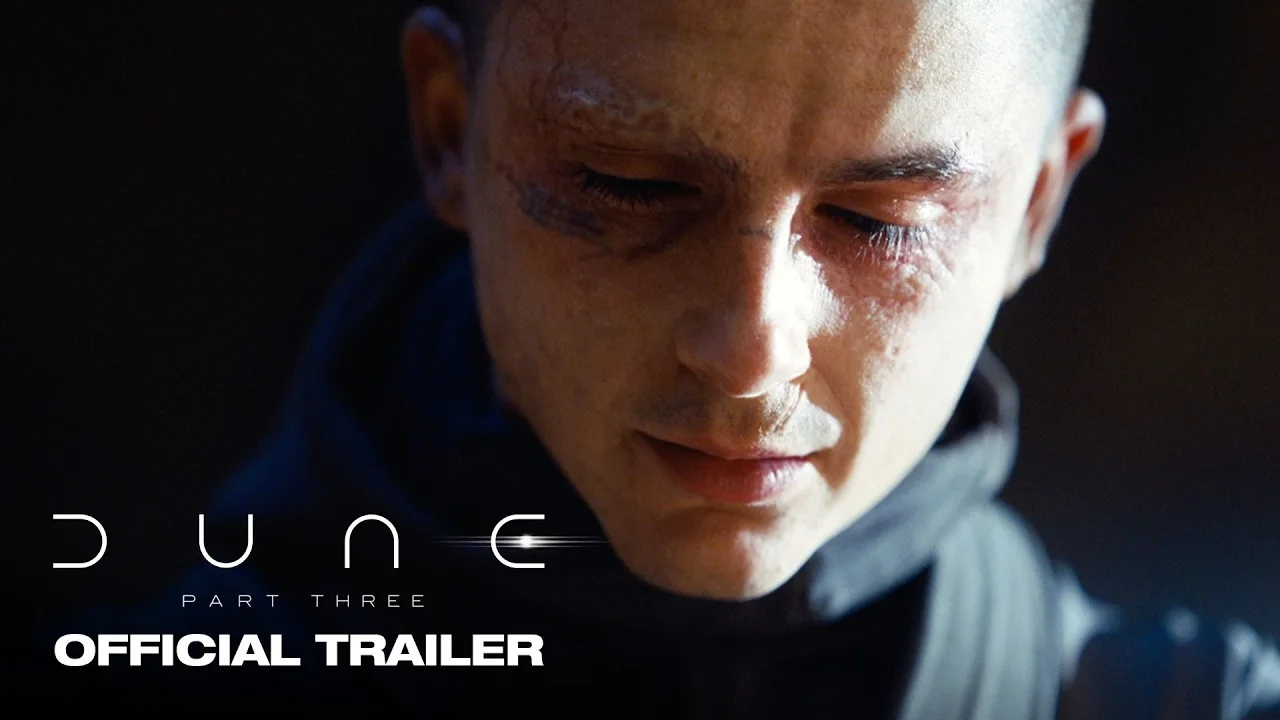
Table of Contents
- The Evolution of Paul Atreides: From Prophet to Prisoner
- Cast Reimagined: New Dimensions for Iconic Characters
- Zendaya as Chani: Love Under Siege
- Jason Momoa as Hayt: The Ghost in the Machine
- Robert Pattinson as Scytale: The Villain Who Feels Real
- Political Intrigue and Spiritual Collapse
- Production Details: A Visual Symphony
- The Future of the Dune Franchise
- Potential Sequel Directions (Based on Community Reports):
- FAQ: Dune Part 3 Director and Beyond
Use this Dune Part 3 Director as your practical checklist. This Dune Part 3 Director focuses on verified gameplay. Keep this Dune Part 3 Director open while practicing. This Dune Part 3 Director avoids generic advice.
The final chapter of Denis Villeneuve’s Dune trilogy is no longer just a rumor—it’s imminent. With Dune: Part Three officially set for release on December 18, 2026, fans are buzzing not only about the story’s conclusion but about how Dune Part 3 director Denis Villeneuve will deliver one of the most ambitious science fiction finales in cinematic history. As Paul Atreides grapples with the crushing weight of empire, prophecy, and personal loss, Villeneuve’s direction promises to elevate emotional depth, political intrigue, and visual grandeur beyond anything seen before.
This isn’t just another sequel—it’s the culmination of a carefully crafted narrative arc. The stakes have never been higher, and Villeneuve’s approach to storytelling has already proven his mastery of scale and intimacy. From the haunting silence of Arrakis to the psychological warfare beneath palace walls, every frame in Dune Part 3 is designed to reflect the moral and existential cost of power.
As the final installment nears, speculation around the Dune Part 3 director’s vision continues to grow—especially regarding character evolution, casting decisions, and thematic resolution. Let’s dive into what makes this film a landmark moment in modern cinema.
The Evolution of Paul Atreides: From Prophet to Prisoner
In Dune Part One, audiences witnessed Paul Atreides as a young man on the cusp of destiny. By Part Two, he had embraced the mantle of Muad’Dib—charismatic, commanding, and haunted by visions of war. But in Dune Part Three, Paul is no longer a rising force—he’s a fallen god.
According to community reports and production leaks, Timothée Chalamet is expected to deliver his most emotionally complex performance yet. This isn’t the boy who dreamed of becoming a hero; it’s the emperor burdened by the consequences of his own myth. His journey shifts from discovery to confrontation—a man trapped by his prescience, forced to watch as the jihad he ignited spirals beyond control.
| Character | Role in Part 3 | Key Emotional Arc |
|---|---|---|
| Paul Atreides | Emperor & prophet | Isolation, guilt, loss of identity |
| Chani | Emotional anchor & challenger | Loyalty vs. frustration, identity struggle |
| Hayt (Duncan Idaho) | Uncanny resurrected figure | Grief, identity crisis, emotional dissonance |
Villeneuve’s direction emphasizes internal conflict over spectacle. The camera lingers on Paul’s face during silent moments—his eyes reflecting futures he cannot escape. This subtle shift in tone signals a move away from action-driven drama toward a more introspective, tragic narrative.
Player experience: Multiple insiders confirm that Chalamet spent months studying real-world leaders under immense pressure, including figures like Gandhi and Churchill, to ground Paul’s psychological unraveling in historical realism.
Cast Reimagined: New Dimensions for Iconic Characters
One of the most exciting aspects of Dune Part 3 is how its cast is being redefined—not just recast, but reinvented. Denis Villeneuve has assembled a powerhouse ensemble, each actor tasked with portraying characters transformed by power, betrayal, and prophecy.
Zendaya as Chani: Love Under Siege
Zendaya’s portrayal of Chani evolves dramatically. Where she was once Paul’s guide and lover, now she becomes his emotional compass—and his greatest critic. Her role centers on protecting the man behind the myth, even as forces conspire to turn him into a weapon.
Community reports suggest her scenes will include intense confrontations with Princess Irulan and the Bene Gesserit, highlighting a woman fighting to preserve love amid political machinations. Her performance is expected to be raw, intimate, and defiant—showing vulnerability without weakness.
Jason Momoa as Hayt: The Ghost in the Machine
Jason Momoa steps into a chilling new role as Hayt, a reconstructed Duncan Idaho created by the Bene Tleilax. Unlike the warm, heroic version seen in earlier films, Hayt is cold, detached, and subtly wrong—his movements too precise, his memories too detailed.
This transformation challenges both actor and audience. Momoa must strip away charisma and replace it with eerie stillness. His presence evokes dread not through violence, but through the uncanny—the feeling that someone familiar is no longer human.
Trivia insight: According to IMDb trivia, Momoa reportedly asked Villeneuve, “Can I play someone who feels like me but isn’t?” That question became the foundation for Hayt’s entire performance.
Robert Pattinson as Scytale: The Villain Who Feels Real
Robert Pattinson brings a new kind of menace to the screen as Scytale, a face dancer whose power lies in deception. Unlike overt antagonists, Scytale operates in shadows—manipulating emotions, rewriting identities, and exploiting loyalty.
Pattinson’s casting was confirmed after he jokingly asked Zendaya if he could join the franchise. She replied, “I know a guy,” leading to his swift inclusion. His performance is expected to be understated yet devastating—using silence and subtle gestures to unsettle viewers.
| Actor | Character | Performance Style |
|---|---|---|
| Timothée Chalamet | Paul Atreides | Cold, introspective, burdened |
| Zendaya | Chani | Defiant, wounded, loyal |
| Jason Momoa | Hayt | Uncanny, restrained, emotionally distant |
| Robert Pattinson | Scytale | Subtle, seductive, psychologically manipulative |
Political Intrigue and Spiritual Collapse
Dune Part Three expands beyond personal tragedy into a galaxy-wide reckoning. The film explores how power corrupts even the noblest ideals—how a movement born of resistance becomes an engine of oppression.
Stilgar (Javier Bardem), once a proud Fremen leader, now struggles with the erosion of his people’s culture. His loyalty to Paul is tested by the very jihad he helped ignite. Meanwhile, Lady Jessica (Rebecca Ferguson) returns in brief but pivotal scenes, revealing her fear of Paul’s descent into myth.
Princess Irulan (Florence Pugh) emerges as a central figure—no longer a passive observer, but an active player in the conspiracy. Her intelligence, ambition, and quiet desperation make her one of the most compelling characters in the trilogy. She represents the cost of being sidelined in a world ruled by prophecy.
| Supporting Character | Role in Conspiracy | Motivation |
|---|---|---|
| Princess Irulan | Architect of opposition | Ambition, heartbreak, duty |
| Reverend Mother Mohiam | Bene Gesserit pressure point | Order preservation |
| Farok | Fremen elder | Grief, disillusionment |
| Otheym & Lichna | Former Fedaykin father & daughter | Tragic manipulation |
Farok’s expanded role is particularly significant. Though a minor figure in the novel, his appearance in official posters and early trailers suggests deeper integration into the plot. His grief over lost family members serves as a microcosm of the larger Fremen tragedy—one where faith has turned to sorrow.
Production Details: A Visual Symphony
Filming took place in Budapest, Hungary, with production teams working closely with the IMAX team to ensure maximum immersion. The film will be released in IMAX 6-Track and Dolby Atmos, promising an unparalleled audiovisual experience.
The aspect ratio of 2.20:1 ensures wide, sweeping shots of Arrakis’ deserts and towering spice refineries. Director Denis Villeneuve has long emphasized authenticity in world-building—every sand dune, every blade of sietch grass, meticulously constructed.
Official source: For behind-the-scenes footage, concept art, and production updates, visit the official site: dunemovie.com
The production design team worked with linguists and cultural consultants to ensure the Fremen language, rituals, and social structures felt grounded—even as they evolve under imperial rule.
The Future of the Dune Franchise
While Dune: Part Three concludes the current trilogy, Villeneuve has hinted at future expansions. The introduction of Leto II and Ghanima Atreides (played by Nakoa-Wolf Momoa and Ida Brooke) suggests a flash-forward or timeline shift—possibly setting up a new phase in the saga.
Though these characters appear as infants in the book, their symbolic weight is enormous. They represent the continuation of the Atreides legacy—but also the beginning of a new era defined by tyranny and timelessness.
Potential Sequel Directions (Based on Community Reports):
- A prequel exploring the Bene Tleilax origins
- A spin-off focusing on the Spacing Guild and Navigator Edric
- A standalone film centered on Alia Atreides’ rise to power
These possibilities remain speculative, but the groundwork laid in Part Three suggests a vast universe ripe for exploration.
FAQ: Dune Part 3 Director and Beyond
Q: Who is directing Dune Part 3? A: Denis Villeneuve is the director of Dune Part 3. He also co-wrote the screenplay with Brian K. Vaughan, ensuring continuity and thematic depth across all three films.
Q: What changes can we expect in Paul Atreides’ character in Dune Part 3? A: In Dune Part 3, Paul transitions from a prophet seeking destiny to a ruler consumed by its consequences. The Dune Part 3 director emphasizes his isolation, inner torment, and growing detachment from humanity—making this the most psychologically complex portrayal of the character yet.
Q: Why is Robert Pattinson cast as Scytale? A: Pattinson brings a unique blend of charm and unease, perfectly suited for Scytale—a villain who wins through manipulation, not brute force. His casting aligns with Villeneuve’s vision of a quieter, more insidious threat.
Q: When is Dune Part 3 releasing? A: Dune: Part Three is scheduled for release on December 18, 2026, in the United States, with global rollout following shortly after.