
Dune Part 3 Dune Messiah: What to Expect in the Final Chapter
Explore the latest on Dune Part 3 Dune Messiah, including cast, plot twists, and key moments from the new trailer.
- Last checked
- 2026-07-12
- Last updated
- 2026-07-12
- Editor
- Dune Part 3 Wiki Team
- Source check
- Official movie pages and high-trust entertainment coverage
- Applies to
- 2026 theatrical release updates
Independent fan-made wiki. Not affiliated with Warner Bros., Legendary Pictures, Denis Villeneuve, or the Dune rights holders.
Quick Guide
- Step 1Distinguish Dune Messiah source material from confirmed film changes.
- Step 2Use spoiler-aware summaries before detailed ending discussion.
- Step 3Verify new adaptation details against official materials.
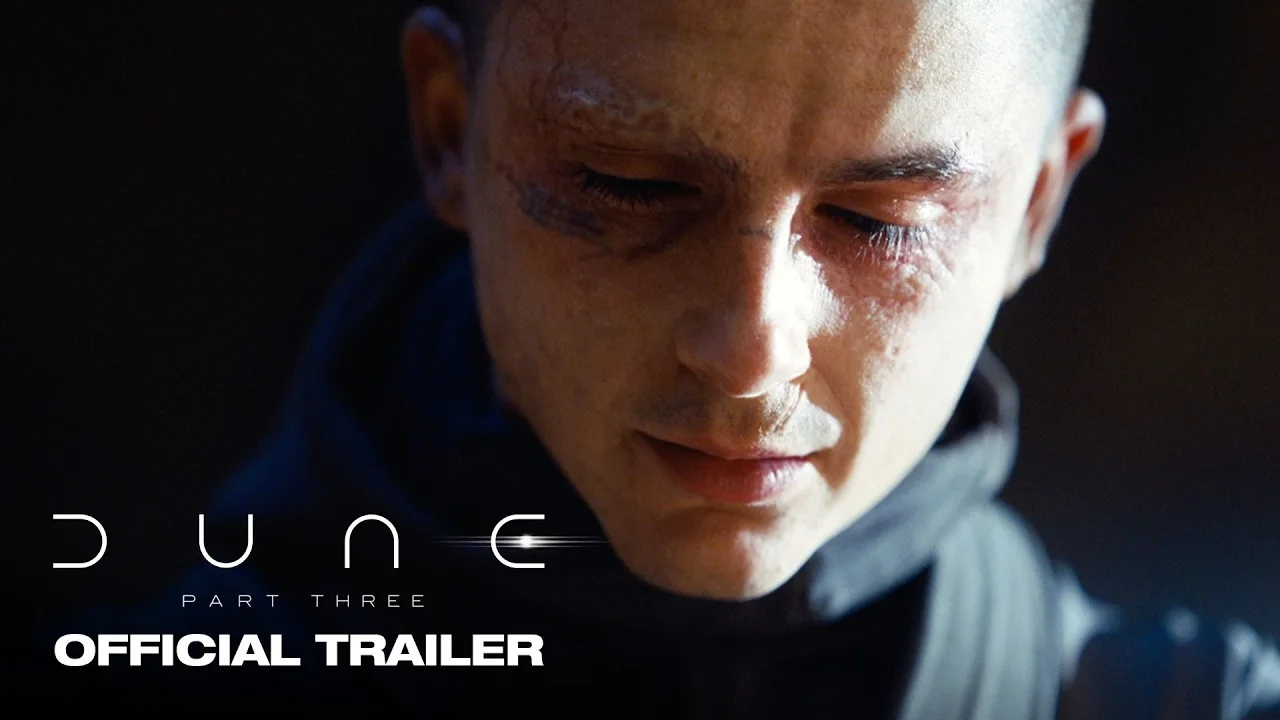
Table of Contents
- The Evolution of Paul Atreides: From Warrior to Emperor
- Chani’s Role: Love, Loss, and the Power of Choice
- The Golden Path and the Falling Moon: Prophecy vs. Free Will
- Key Characters and Their Arcs in Dune Part 3 Dune Messiah
- Timothée Chalamet – Paul Atreides
- Zendaya – Chani
- Jason Momoa – Duncan Idaho (as “Hate”)
- Robert Pattinson – Scytale
- Florence Pugh – Princess Irulan
- FAQ: Your Questions About Dune Part 3 Dune Messiah Answered
The final chapter of Denis Villeneuve’s Dune saga is nearly upon us. With the release of Dune Part 3 Dune Messiah just months away, fans are buzzing over leaked footage, character arcs, and the emotional weight of Paul Atreides’ transformation into an emperor. This isn’t just another sci-fi epic—it’s a mythic reckoning that explores power, prophecy, and the cost of destiny. As the dust settles from the jihad, the question remains: can Paul Atreides save humanity without destroying himself?
Dune Part 3 Dune Messiah promises to deliver one of the most emotionally charged and visually stunning finales in cinematic history. From Chani’s mysterious desert journey to Paul’s haunting visions of a falling moon, every frame teases deeper philosophical questions. The film will be based primarily on Frank Herbert’s novel Dune Messiah, but with significant creative liberties—especially regarding timelines, character fates, and pivotal scenes.
In this deep dive, we’ll unpack everything we know about Dune Part 3 Dune Messiah, from casting updates and visual symbolism to major plot theories backed by community reports and official trailers. Whether you’re a longtime fan or new to the universe, this is your essential guide to what’s coming in the final act of one of modern cinema’s greatest epics.
The Evolution of Paul Atreides: From Warrior to Emperor
Paul Atreides has come a long way since his arrival on Arrakis. In Dune Part 3 Dune Messiah, he stands not as a young warrior, but as a hardened emperor who has led a galaxy-wide holy war for 17 years—a shift from the book’s 12-year timeline that underscores the escalating toll of his reign. The teaser trailer shows Paul emerging from a crater, surrounded by burning forests and soldiers, his face etched with exhaustion and grief. These visuals aren’t just spectacle—they’re psychological portraits of a man drowning in the consequences of his own foresight.
Community reports suggest that these sequences may blend flashbacks with prophetic visions, blurring the line between memory and fate. One particularly haunting moment shows Paul and Chani together, seemingly happy, with her visibly pregnant. However, given that their twins are only born at the end of the novel, many believe this could represent an alternate future—one Paul sees but cannot prevent. This duality reinforces a central theme in Dune Part 3 Dune Messiah: even with perfect vision, free will remains elusive.
| Timeline Comparison | Book (Dune Messiah) | Film (Dune Part 3) |
|---|---|---|
| Duration of Jihad | 12 years | 17 years |
| Birth of Twins | End of book | Early in film |
| Chani’s Pregnancy | Not shown | Visible in trailer |
| Paul’s Blindness | After stone burner | Implied in climax |
This expanded timeline allows Villeneuve to explore Paul’s mental deterioration more deeply. Unlike the book, which begins with historical exposition, Dune Part 3 Dune Messiah opens like Saving Private Ryan—with visceral, immersive combat. This narrative choice makes Paul’s internal struggle feel immediate, not abstract. His iconic Atrides locks return during flashback sequences, contrasting sharply with his bald, scarred appearance later in the film—a visual metaphor for his loss of identity.
One of the most powerful lines in the trailer, “I’m not afraid to die,” spoken as Paul stands before his army, echoes the same defiance seen in earlier films—but now tinged with resignation. He no longer fights for survival; he fights because he believes it’s necessary. But as the story progresses, that belief will be tested like never before.
Chani’s Role: Love, Loss, and the Power of Choice
Chani has always been more than just Paul’s love interest—she’s his moral compass. In Dune Part 3 Dune Messiah, her role becomes even more complex. The trailer reveals multiple versions of her: grieving, pregnant, walking across the desert, and even appearing in what some suspect is a disguise. These conflicting images have sparked intense debate among fans.
Player experience suggests that the scene where Chani lets go of her blue scarf—the noni scoff—is symbolic of her departure from Paul’s world. Worn by Fremen to signify romantic commitment, its release implies she’s choosing freedom over loyalty. But here’s the twist: the scarf is later picked up by someone else. Could it be Scytale? Robert Pattinson’s character is known as a “sand dancer” capable of shapeshifting, and early rumors claim he may appear in Chani’s form.
Another theory, supported by community reports, is that Chani is being manipulated by Scytale through psychic influence. The fact that her hair is down in one shot but tied back in others adds fuel to this idea. If true, it would mark a shocking betrayal—not just of Paul, but of the audience’s trust in the narrative.
| Character Theory | Evidence | Source Type |
|---|---|---|
| Chani as Scytale | Hair change, odd behavior | Player experience |
| Chani in alternate future | Pregnant, happy moment | Trailer analysis |
| Chani’s death | Crying, pain, sandwalk | Visual cues |
| Chani controlling worm | Stops mid-charge | Symbolism |
What’s undeniable is that Chani’s arc centers around sacrifice. She’s torn between protecting Paul and preserving her children’s future. Her confrontation with Paul—“How does it feel to be human?”—is likely a turning point. That moment, paired with Paul drawing his knife, suggests a test of identity: can Paul still be loved if he’s no longer fully human?
Interestingly, the film appears to diverge from the book by introducing the twins earlier. In the original text, Leato and Ghanima are babies. Here, they’re clearly toddlers. This change may allow for more emotional depth in Paul’s relationship with them—and heighten the stakes when he must choose between saving them or following the Golden Path.
The Golden Path and the Falling Moon: Prophecy vs. Free Will
At the heart of Dune Part 3 Dune Messiah lies a paradox: Paul sees the future, but cannot control it. The recurring vision of a falling moon—first glimpsed in the book—is now a cinematic centerpiece. The image of Paul silhouetted against a massive moon, eyes closed, evokes both awe and dread. According to the novel, this vision symbolizes the collapse of his empire and the potential death of Chani.
But in the film, this moment takes on new meaning. The golden light flashing toward the screen may represent the Golden Path—a future timeline that demands immense sacrifice but leads to a stronger civilization. It’s a path Paul’s son Leato will walk, ultimately becoming a god-like figure who oppresses humanity for millennia. Yet, as the book concludes, this is part of a greater design.
The tension between fate and choice defines the entire trilogy. Even with precognition, Paul cannot see everything. The trailer hints at this when he says, “I can’t see what’s ahead.” This line, delivered while staring into the void, is devastatingly simple—and profoundly human.
| Vision Symbol | Meaning | Source |
|---|---|---|
| Falling Moon | Empire’s downfall | Book & trailer |
| Golden Light | The Golden Path | Book |
| Stone Burner Flash | Blinding moment | Book |
| Scarf Pickup | Possible deception | Community report |
The stone burner blast, which blinds Paul in the book, appears to be a major sequence in the film. We see him standing on the battlefield, eyes dead, yet still perceiving through his prescience. This moment marks his transition from warrior to prophet—and possibly, from savior to tyrant.
Moreover, the scene where Alia confronts Reverend Mother Mohiam may be reimagined as a psychic battle of wills. In the book, Alia uses her genetic memory to enter Mohiam’s mind. In the film, blood-covered and desperate, she may be trying to expose the conspiracy behind the assassination plots. Given that Alia is pre-born and infused with ancestral memories, her actions could foreshadow her eventual descent into madness.
Key Characters and Their Arcs in Dune Part 3 Dune Messiah
With Dune Part 3 Dune Messiah nearing completion, the full scope of character development is finally clear. Each major player faces a defining moment—one that will determine whether they survive, surrender, or betray.
Timothée Chalamet – Paul Atreides
Paul evolves from reluctant leader to self-aware emperor. His journey is one of isolation and disillusionment. By the end, he asks for forgiveness—his first admission of guilt. This moment is pivotal: he’s no longer just a man of destiny, but a man burdened by it.
Zendaya – Chani
Her arc shifts from lover to revolutionary. The film suggests she may not be who she seems. Whether she’s truly herself or a decoy created by Scytale remains one of the biggest mysteries.
Jason Momoa – Duncan Idaho (as “Hate”)
Momoa returns as a clone of Duncan Idaho, now named “Hate”—a name rich with irony. While devoid of memories, he begins to regain them through emotional triggers, such as seeing Leato’s skull. His internal conflict mirrors Paul’s: can one reclaim humanity after being remade?
Robert Pattinson – Scytale
Pattinson’s portrayal of Scytale is already generating buzz. Known for his enigmatic presence, he plays a shape-shifter embedded in the Bene Gesserit conspiracy. Rumors suggest he’s not just manipulating Chani—he may be orchestrating the entire plot from within Paul’s court.
Florence Pugh – Princess Irulan
Her role expands beyond observer. In the book, she’s a political pawn. In the film, she’s actively involved in the plot to assassinate Paul—tasked with preventing Chani from bearing children so she can carry Paul’s heir instead. This twist adds layers to her character and raises ethical questions about legacy and power.
| Character | Role in Dune Part 3 Dune Messiah | Potential Fate |
|---|---|---|
| Paul Atreides | Emperor, prophet, father | Sacrifice or downfall |
| Chani | Lover, mother, possible imposter | Betrayal or redemption |
| Duncan Idaho (Hate) | Clone, mentor, rebel | Regains memory, rebels |
| Scytale | Shapeshifter, conspirator | Unmasked or killed |
| Princess Irulan | Political strategist | Becomes ruler or martyr |
These characters don’t just react—they drive the narrative forward. The film’s structure leans heavily on personal relationships rather than grand battles, making emotional stakes higher than ever.
FAQ: Your Questions About Dune Part 3 Dune Messiah Answered
Q: When is Dune Part 3 Dune Messiah releasing? A: Dune Part 3 Dune Messiah is scheduled for release on December 18, 2026, in the United States. Fans worldwide can expect a global rollout shortly after.
Q: Is Dune Part 3 Dune Messiah based on the book? A: Yes, Dune Part 3 Dune Messiah is primarily based on Frank Herbert’s novel of the same name. However, director Denis Villeneuve has made notable changes, including expanding the timeline of the jihad and altering character arcs—particularly for Chani and the twins.
Q: What happens to Paul Atreides in Dune Part 3 Dune Messiah? A: Paul’s journey culminates in a spiritual and physical crisis. After leading a galactic jihad, he loses his sight and grapples with the consequences of his actions. Ultimately, he must choose between saving his family or following the Golden Path—an outcome that demands unimaginable sacrifice.
Q: Why is Scytale so important in Dune Part 3 Dune Messiah? A: Scytale is central to the Bene Gesserit conspiracy to assassinate Paul. As a sand dancer capable of shapeshifting, he infiltrates Paul’s inner circle and manipulates key figures—including potentially impersonating Chani. His presence raises critical questions about identity, loyalty, and the nature of truth in a world ruled by prophecy.
For more official details, visit the Dune Movie Official Site.